Work
Journey mapping, Iinformation architecture, Interaction design, User flow design.
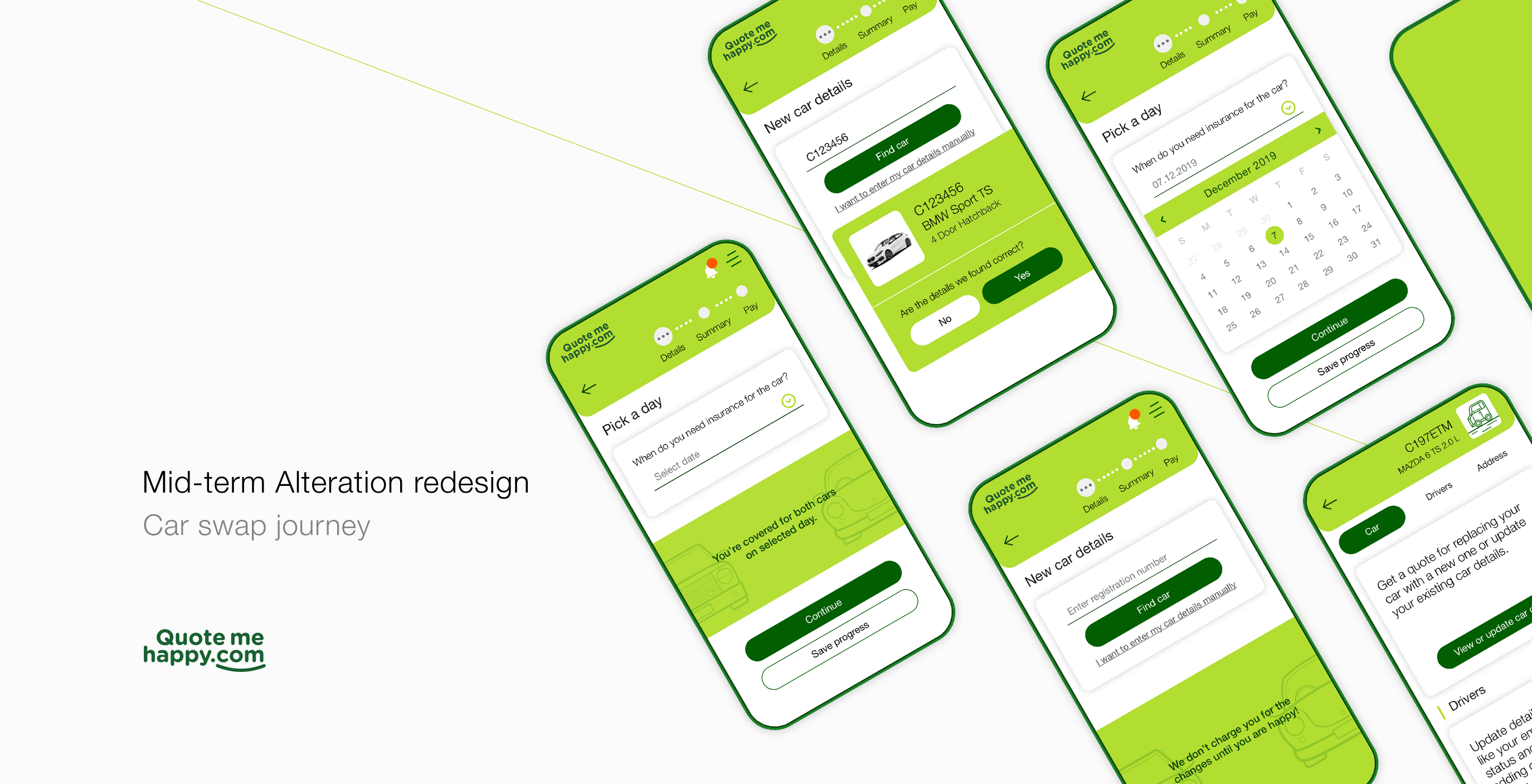
Car Swap Journey
Redesigning a complex policy change so customers can update their car and understand their cover with greater confidence.
Context
Changing a car was one of the most common mid-term alterations for Quotemehappy.com customers. It accounted for 43% of all policy changes and 20% of requests for help when customers could not complete a task themselves. Yet the journey had largely followed a design created in 2011. Improving it was the next phase of the self-service redesign, following My Account.
The problem
Customers faced more than 20 questions in a journey with weak grouping and unclear hierarchy. They were asked to choose the change date early, before they had worked through the details. Making more than one change was cumbersome, and customers could not save a quote to return to it later.
The journey also failed to explain whether both cars would be covered on the day of the change. Questions about this accounted for a further 4% of requests for help. At a moment when customers needed certainty about both price and cover, the experience left important questions unanswered.
The current journey
The existing flow was hard to scan and lengthy to complete. Making more than one change added friction, increasing the risk that customers would abandon the journey or seek help.
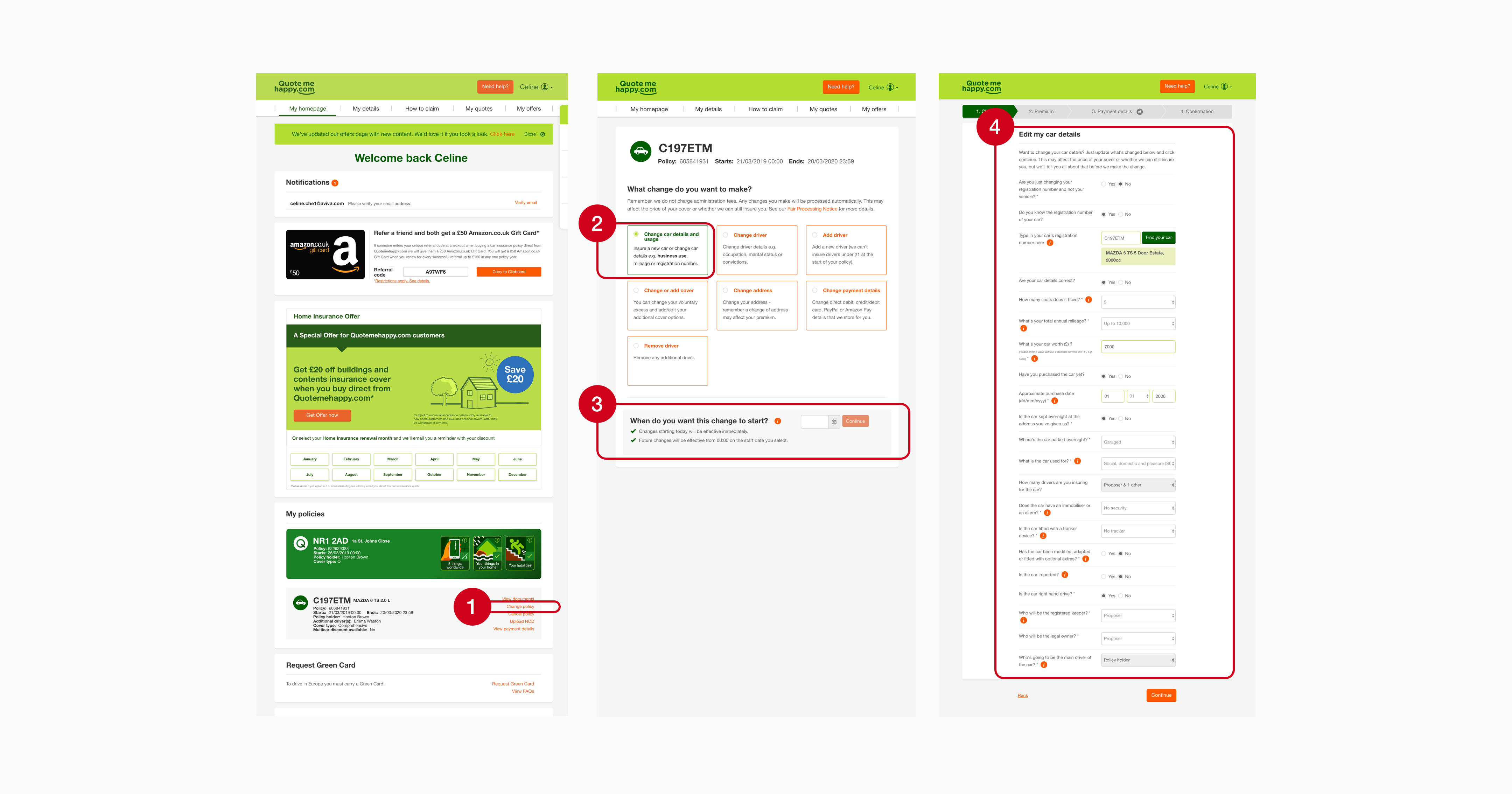
Not intuitive, and short on hierarchy and logical grouping.
Customers scrolled through more than twenty questions.
Several changes at once were clumsy and confusing.
Nothing told people both cars were covered on the change day — about 4% of failure demand.
No way to save a quote, which discouraged comparing options.
The date was asked at the start, which felt unnatural.
The design challenge
How might customers change their car, understand the effect on their policy and complete any related changes without losing track of the process?
My contribution
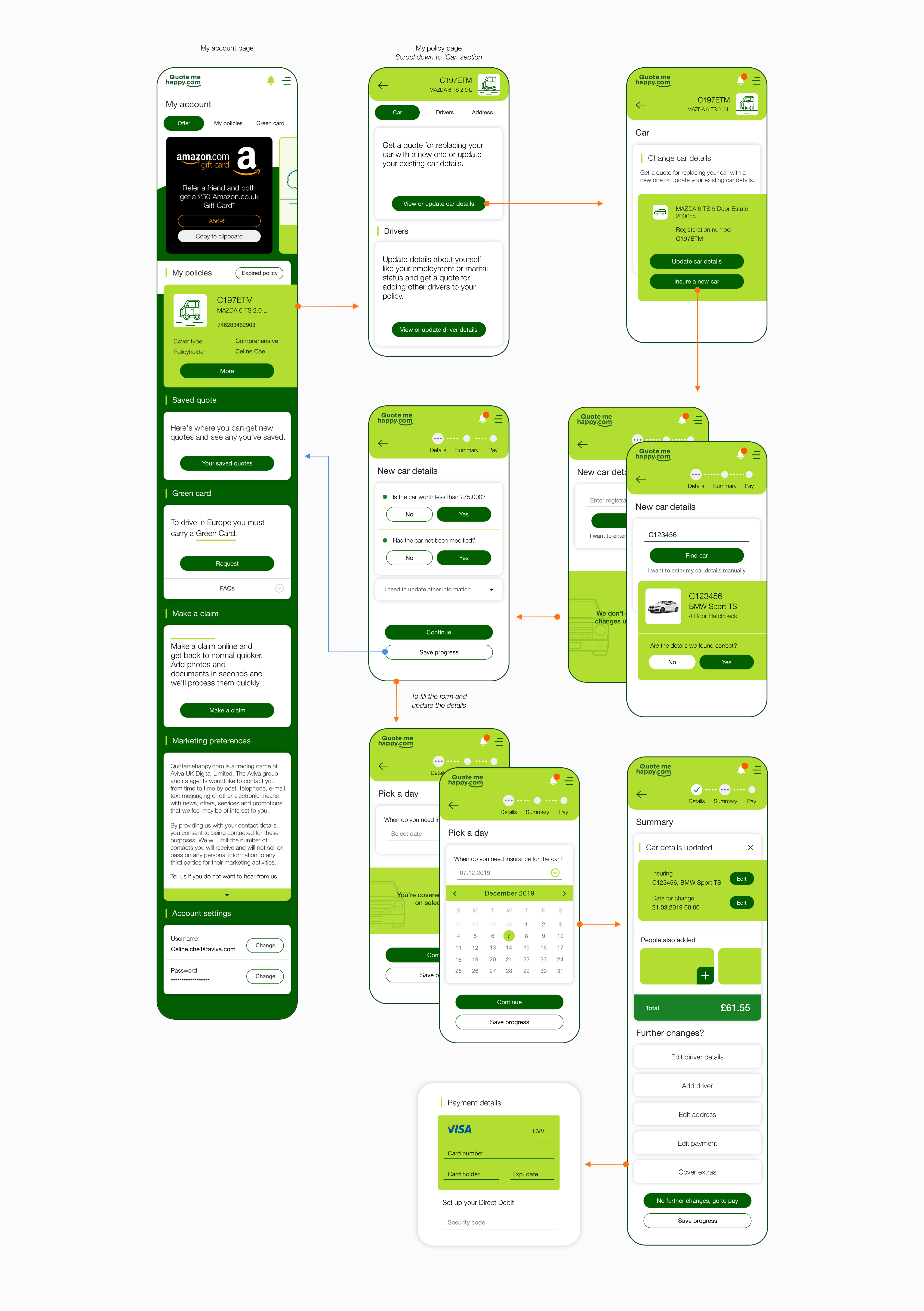
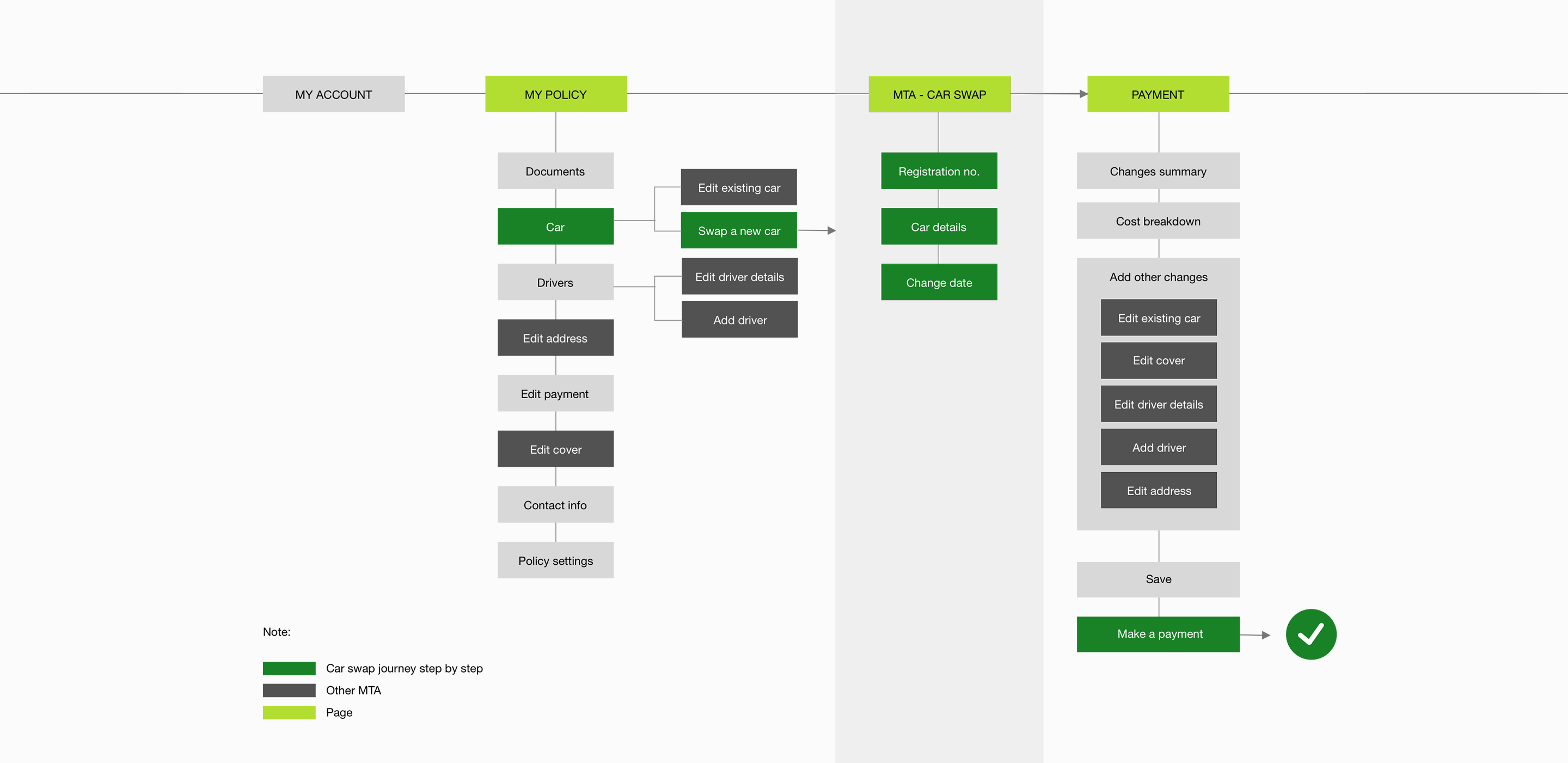
I mapped the existing journey and explored a flow that groups related questions into clearer stages. The proposed design helps customers see what they need to provide, review the effect of a change and understand what happens next.
The work also addressed the moments that caused the most uncertainty: when to choose the effective date, how to explain cover on the change day, and how customers could save a quote or make another change before paying.
The design response
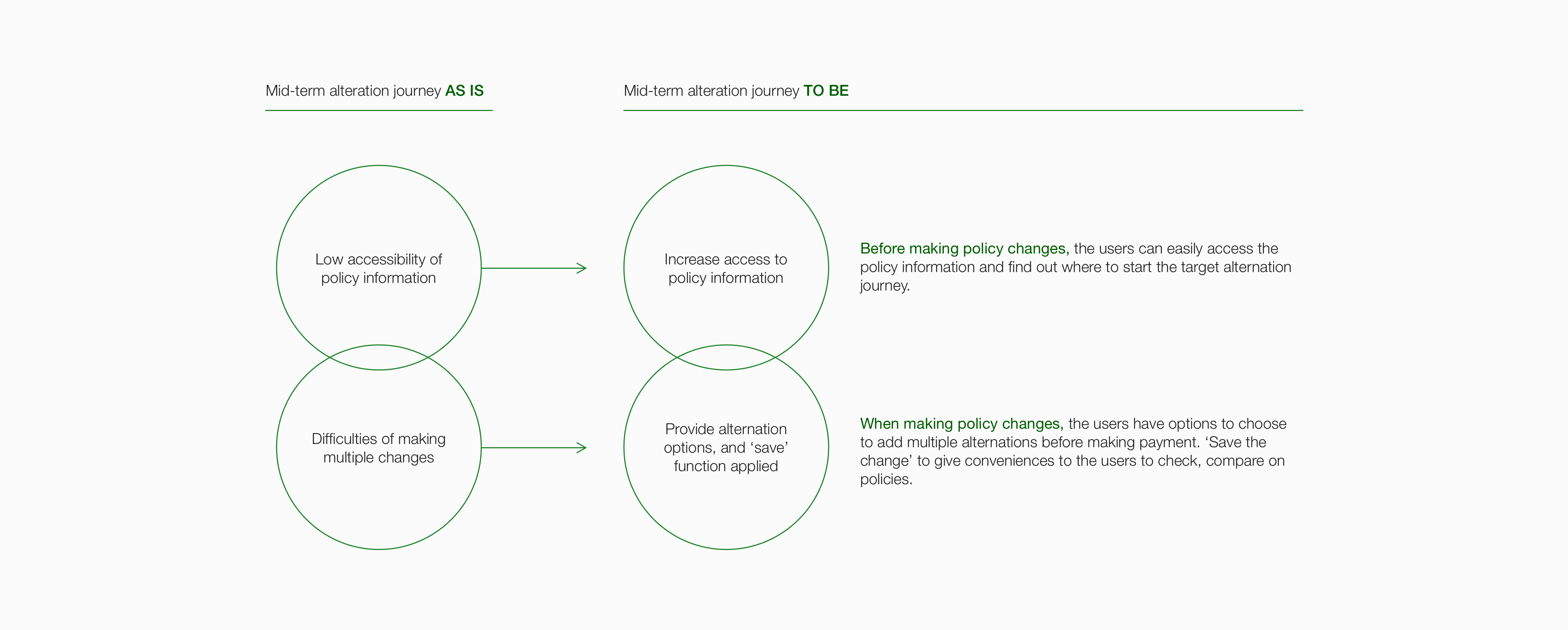
The proposed journey groups related questions into clearer stages and gives customers opportunities to review their choices. It makes information about cover on the change day more visible and supports customers who need time to consider a quote or make more than one alteration.
Solution
From flow to screens
The journey map established the order of decisions. Wireframes then explored the question groups, review points and information hierarchy across the flow. Together, they show how a lengthy form could become a more understandable sequence of decisions.
Redesigned flow
Wireframe
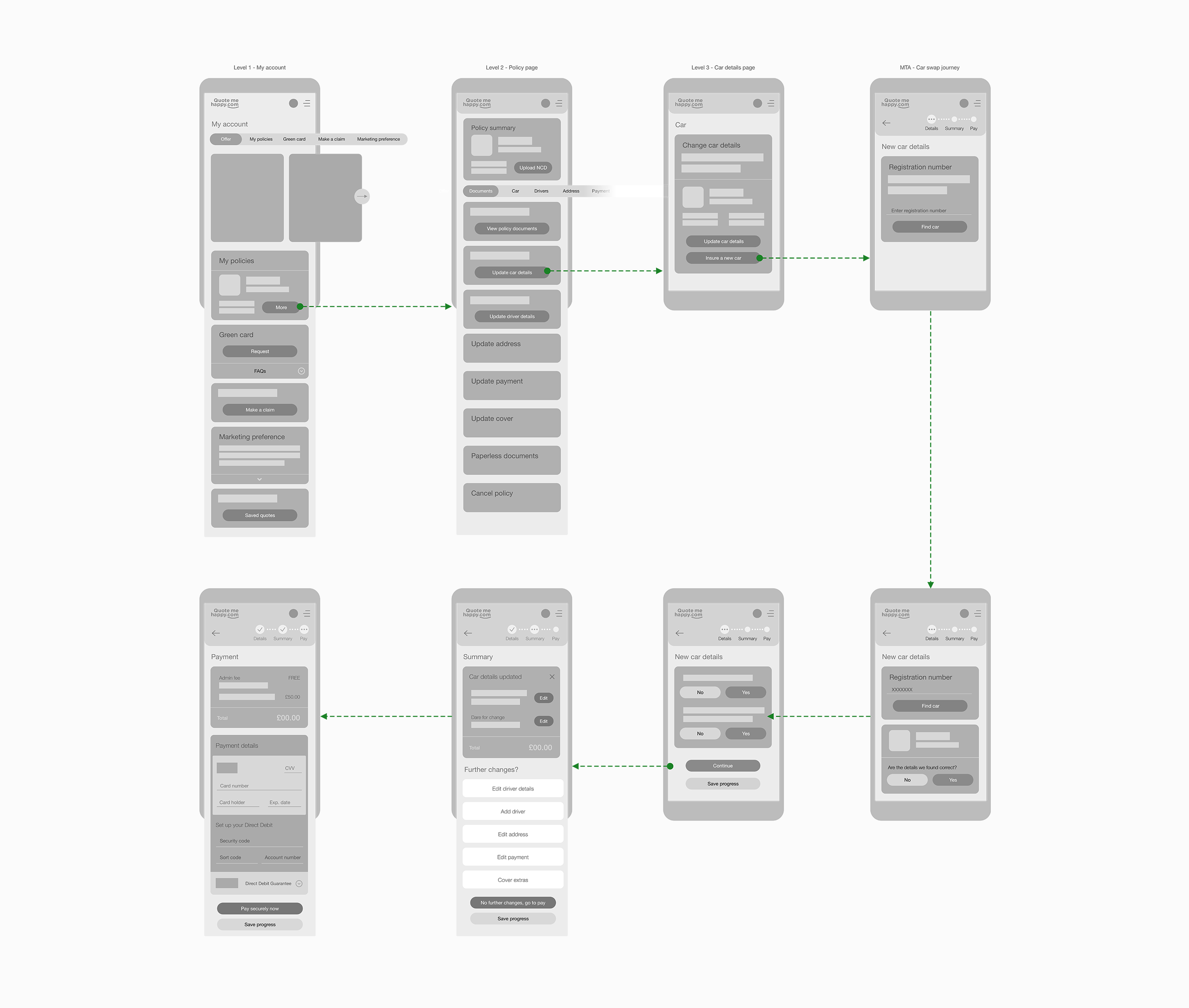
Car swap journey overview
The full journey brings these decisions together, from entering the car details through reviewing the effect on the policy and completing the change.